
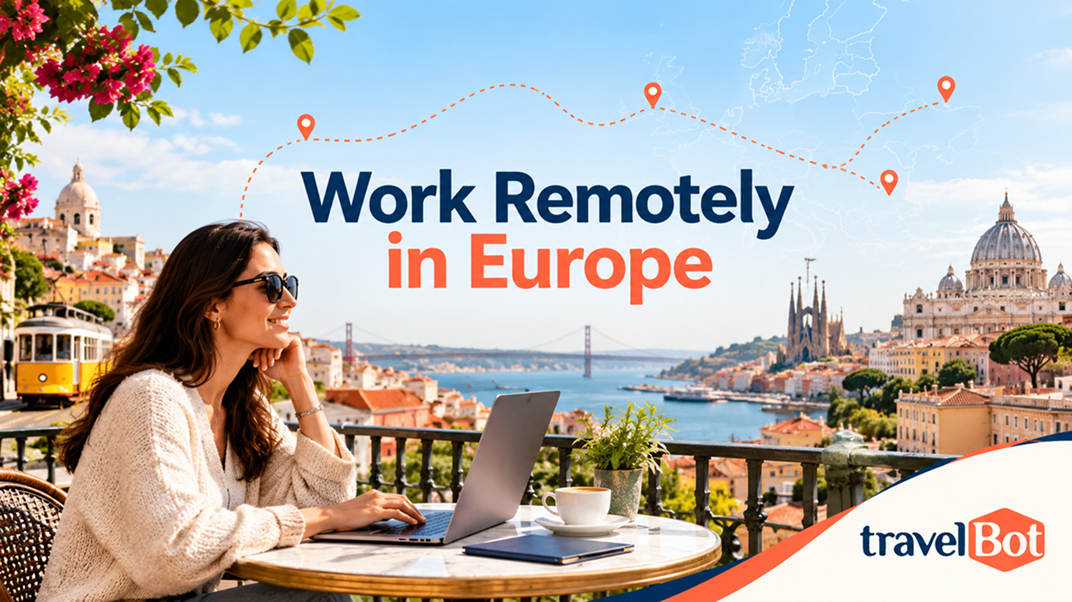
Top European Digital Nomad Visas for Remote Workers
Working remotely from Europe offers the chance to explore historic cities, enjoy different cultures, and build an international lifestyle without giving up your career. However, staying legally while working online requires more than a tourist visa. A digital nomad visa can provide an approved route for eligible remote employees, freelancers, and business owners.
If you are researching the best digital nomad visas in Europe, this guide compares popular destinations, income requirements, eligibility criteria, and application considerations for 2026. It also highlights options worth exploring for UAE residents and other international applicants.
What Is a European Digital Nomad Visa?
A European digital nomad visa is a national visa or residence permit that allows eligible foreign nationals to live in a particular country while working remotely for an overseas employer or clients. Some programmes also permit limited local professional activity, subject to specific conditions.
Not every European country offers the same arrangement, and approval does not automatically grant permission to work throughout Europe. Your rights depend on the country issuing the visa and its immigration rules.
Best European Digital Nomad Visas for Remote Workers
Several European destinations stand out for remote workers because of their lifestyle, infrastructure, international communities, and established remote work programmes.
1. Portugal Digital Nomad Visa
The Portugal digital nomad visa, commonly called the D8 visa, is an option for remote employees and self employed professionals earning income from outside Portugal.
Why consider Portugal?
- Pleasant coastal cities and a well established international community.
- Popular remote work destinations such as Lisbon, Porto, and Madeira.
- Temporary stay and longer term residence visa routes.
Income requirement: In 2026, applicants generally need to demonstrate average monthly professional income of at least €3,680, equivalent to four times Portugal’s €920 minimum monthly wage. Applicants must also provide evidence of remote employment or services and meet the other applicable conditions.
Portugal may suit applicants seeking a longer term European base, provided they can meet the financial and documentation requirements.
2. Spain Digital Nomad Visa
Spain is an attractive choice for remote professionals who want access to modern infrastructure, cultural attractions, and a warm Mediterranean lifestyle.
Key benefits include:
- Strong internet connectivity and coworking options.
- International communities in Madrid, Barcelona, Valencia, and Málaga.
- A dedicated international teleworking visa route.
Income requirement: For 2026, a single applicant generally needs to demonstrate at least €2,442 per month, based on 200% of Spain’s €1,221 monthly minimum wage. Additional financial resources are required for qualifying dependants.
Applicants must also demonstrate an eligible professional relationship with a foreign company or clients, relevant qualifications or experience, and compliance with social security and other immigration requirements.
3. Italy Digital Nomad Visa
The Italy digital nomad visa is designed for qualifying highly skilled remote professionals who want to live in Italy while continuing eligible remote work.
Reasons to consider Italy:
- A rich cultural heritage and varied regional lifestyles.
- Major cities such as Milan, Rome, and Florence.
- Access to European travel opportunities.
Italy requires evidence of qualifying professional skills, lawful income, suitable accommodation, health insurance, and previous work experience. The official rules set the minimum annual income at three times the threshold used for exemption from Italian healthcare contributions. The applicable amount should be confirmed with the relevant consulate before applying.
Italy may be particularly suitable for experienced professionals who can document their qualifications and remote work arrangements.
4. Croatia Digital Nomad Residence
Croatia is worth considering for remote workers who prefer coastal living, historic towns, and a relaxed lifestyle.
Its temporary stay programme is intended for eligible third country nationals working remotely for employers or businesses outside Croatia.
Income requirement: The published monthly threshold is €3,622.50 under the rules applicable in 2026. Applicants may alternatively demonstrate sufficient savings for the intended period of stay.
Croatia can appeal to professionals who prioritise lifestyle and access to the Adriatic coast, although applicants should compare the income threshold and permitted stay with other options.
5. Greece Digital Nomad Visa
Greece attracts remote workers with its island lifestyle, historic cities, Mediterranean climate, and international appeal.
Its digital nomad programme is intended for eligible non EU nationals working for employers or clients outside Greece.
Applicants should expect to provide evidence of sufficient income, remote employment or freelance activity, health insurance, accommodation, and other required documents. Income thresholds and family allowances must be checked against current official guidance before applying.
Greece may suit applicants who value outdoor living and want to establish a remote work base in Athens, Thessaloniki, or an eligible island destination.
European Digital Nomad Visa Comparison
| Country | 2026 income benchmark | Best suited for |
| Spain | €2,442 monthly for one applicant | Urban living and international communities |
| Portugal | €3,680 monthly | Longer term relocation plans |
| Italy | Three times the applicable healthcare contribution exemption threshold annually | Highly skilled professionals |
| Croatia | €3,622.50 monthly | Coastal living and temporary stays |
| Greece | Confirm the current official threshold | Mediterranean lifestyle |
These figures are reference points, not guarantees of eligibility. Income calculations, evidence requirements, application fees, and permitted stay can differ by visa category and applicant circumstances.
Digital Nomad Visa Requirements in Europe
Although requirements vary by country, many European digital nomad visa applications involve the following documents:
- A valid passport and completed application form.
- An employment contract, employer letter, or freelance service agreements.
- Proof of income, such as payslips, invoices, or bank statements.
- Evidence of qualifications or relevant professional experience, where required.
- Valid health insurance.
- Police clearance certificates, where required.
- Proof of accommodation and tax residence, where applicable.
- Payment of the visa fee and any required translations or legalisations.
How to Choose the Right Visa
Start by comparing the digital nomad visa income requirements, the length of stay, renewal rules, tax implications, and whether your employment arrangement qualifies.
For additional guidance, read Countries Offering Digital Nomad Visas for UAE Residents and learn about Common Mistakes to Avoid When Applying for a Digital Nomad Visa.
Applicants concerned about processing times can also explore Which Digital Nomad Visa Has the Fastest Approval Process?.
Can UAE Residents Apply for a European Digital Nomad Visa?
Yes. UAE residents may be eligible to apply for a European digital nomad visa if they meet the destination country’s requirements. However, UAE residence alone does not determine eligibility. Your passport nationality, legal residence status, income, employment arrangement, and the consulate responsible for your application can all affect the process.
Before booking flights or accommodation, confirm the application procedure with the relevant embassy or authorised visa centre. Also check whether your residence permit in the UAE will remain valid throughout the application process.
If you are exploring other international travel options, see our guide to [cheap visa free destinations from Dubai] for alternative holiday ideas. For travellers considering remote work in the UAE itself, our Dubai Digital Nomad Visa guide explains another option.
Frequently Asked Questions
Which European country has the best digital nomad visa for remote workers in 2026?
Spain is appealing for applicants seeking a comparatively lower published income threshold, while Portugal suits some longer term relocation plans. The best option depends on your income, nationality, work arrangement, and lifestyle priorities.
Can I live and work remotely in Europe with a digital nomad visa?
Yes, if your visa permits the activity and you follow its conditions. A national digital nomad visa does not automatically authorise remote work from every European country.
Which European countries offer digital nomad visas?
Portugal, Spain, Italy, Greece, and Croatia are among the European destinations with dedicated remote work arrangements. Availability and eligibility depend on the programme and current rules.
Which European country offers the most affordable digital nomad visa?
Affordability depends on visa fees, income thresholds, rent, insurance, and daily living costs. Compare the complete budget rather than choosing a destination based on its visa fee alone.
What are the eligibility requirements for a European digital nomad visa?
Common requirements include a valid passport, eligible remote employment or freelance work, sufficient income, health insurance, and supporting documents. Some countries also require professional qualifications, experience, police clearance, or accommodation evidence.
What is the minimum monthly income required for a digital nomad visa in Europe?
There is no single European minimum. For 2026, Spain’s published benchmark is €2,442 per month for one applicant, while Portugal’s is €3,680. Other countries apply different formulas and requirements.
Which European country has the easiest digital nomad visa to obtain?
There is no universally easiest option. The most practical choice is the country whose eligibility rules match your income, profession, nationality, and supporting documents.
What is the difference between a transit visa and a tourist visa?
A transit visa generally permits passage through a country while travelling to another destination, whereas a tourist visa permits a visit for tourism under its conditions. Neither should be treated as a digital nomad work permit.
What is a transit visa, and how does it work?
A transit visa authorises a qualifying traveller to pass through a country or, in some cases, its international airport during a journey. Requirements depend on nationality, route, airport, and whether the traveller leaves the international transit area.
How can UAE residents apply for a transit visa, and what documents are required?
Check the destination or transit country’s official immigration website or embassy guidance. Common documents include a valid passport, onward ticket, destination visa if required, UAE residence permit, and application form.
When do UAE residents need a transit visa for international flights?
A transit visa may be required depending on passport nationality, the transit airport, airline itinerary, terminal changes, and whether the traveller passes through border control. Verify the rules for every stop before departure.
How long can you stay in a country with a transit visa?
The permitted period varies by country and visa type. It may cover only a short airport transit or allow a brief landside stay. Follow the conditions printed on the visa or provided by immigration authorities.
Do I need a transit visa if I stay inside the airport during a layover?
Not always. Some travellers qualify for airside transit without a visa, while others need one even if they remain inside the airport. Nationality, airport, and itinerary determine the answer.
Which countries require a transit visa for UAE residents?
There is no single list that applies to all UAE residents because requirements often depend on passport nationality and route. Check the official transit rules of each country on your itinerary before travelling.
Conclusion
Choosing among the best digital nomad visas in Europe means balancing income requirements, professional eligibility, living costs, and long term plans. Spain, Portugal, Italy, Croatia, and Greece each offer different advantages, but the right choice depends on your personal circumstances.
Review the latest official immigration guidance before submitting an application, and prepare your supporting documents carefully. Visit Pinoy TravelBot for more visa information, travel guides, and practical support as you plan your next international move.

Recent Posts

Winter Holiday Packages from Dubai: Best Places to Visit in 2026

How to Choose the Right Holiday Package for Your Budget
Top European Digital Nomad Visas for Remote Workers
All Categories

Thailand